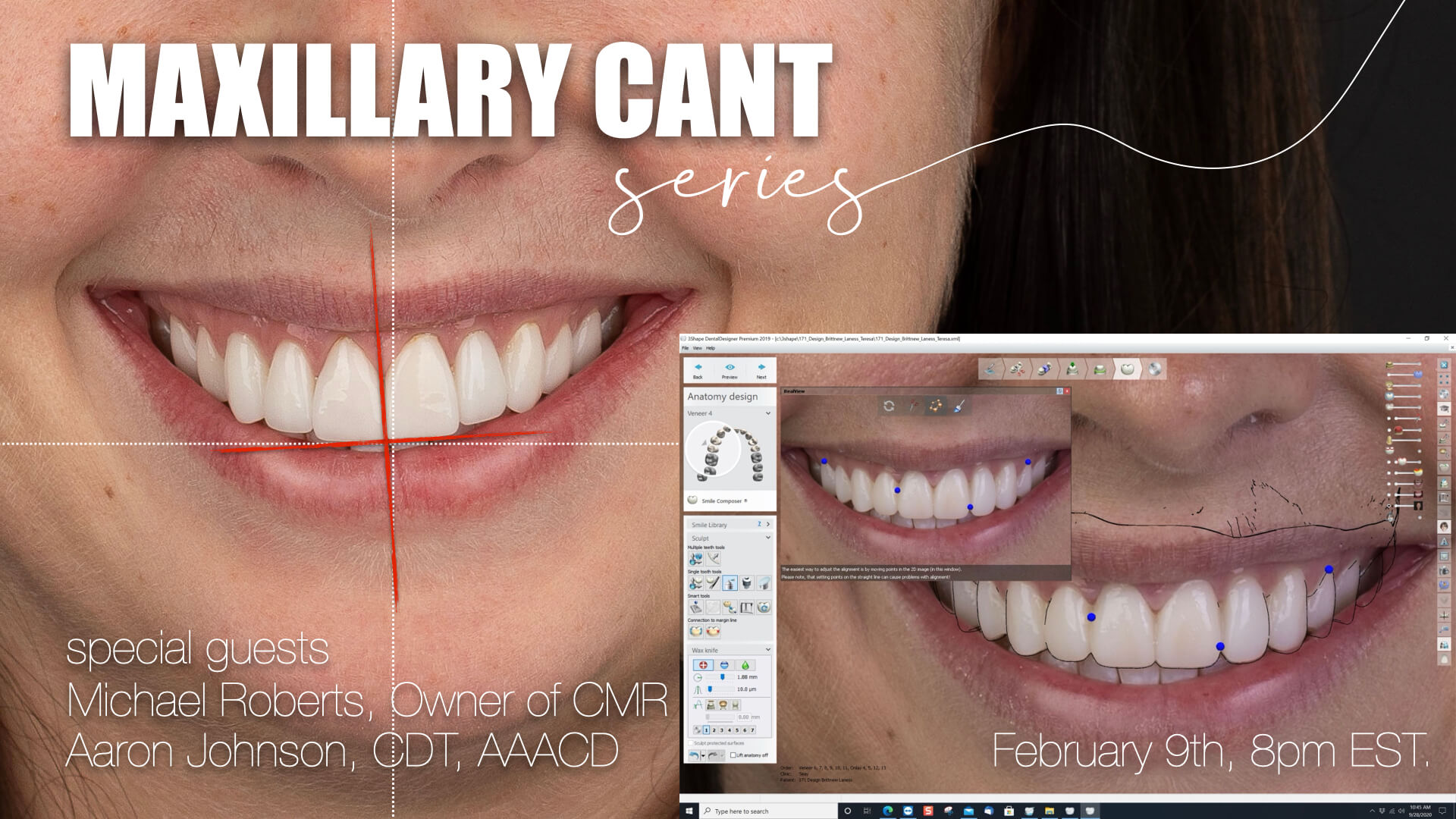
Every smile tells a story, and sometimes what looks like a simple esthetic concern is hiding a functional one. Not long ago a young patient came to me frustrated by the discomfort of long teeth. She thought that was the whole problem. What she didn't know was that a canted maxilla was driving most of it. That's the pattern worth naming up front: a complaint about tooth length is often really a complaint about the face, and it only reveals itself when you look at the face first.
Why "Long Teeth" Is Rarely About the Teeth
When a patient says their teeth feel too long, the instinct is to shorten teeth. But length is relative — relative to the lip, the midline, and the horizon of the face. If the maxilla is canted, one side reads long and heavy no matter what the ruler says, and no amount of incisal adjustment fixes a problem that lives above the teeth. This is why I don't begin with a handpiece. I begin with records.
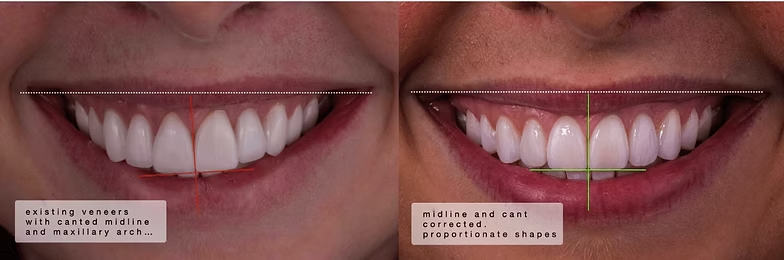
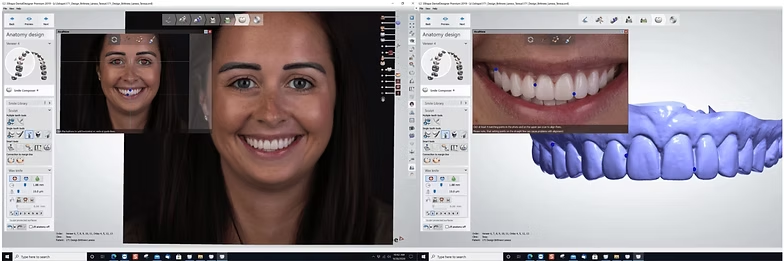
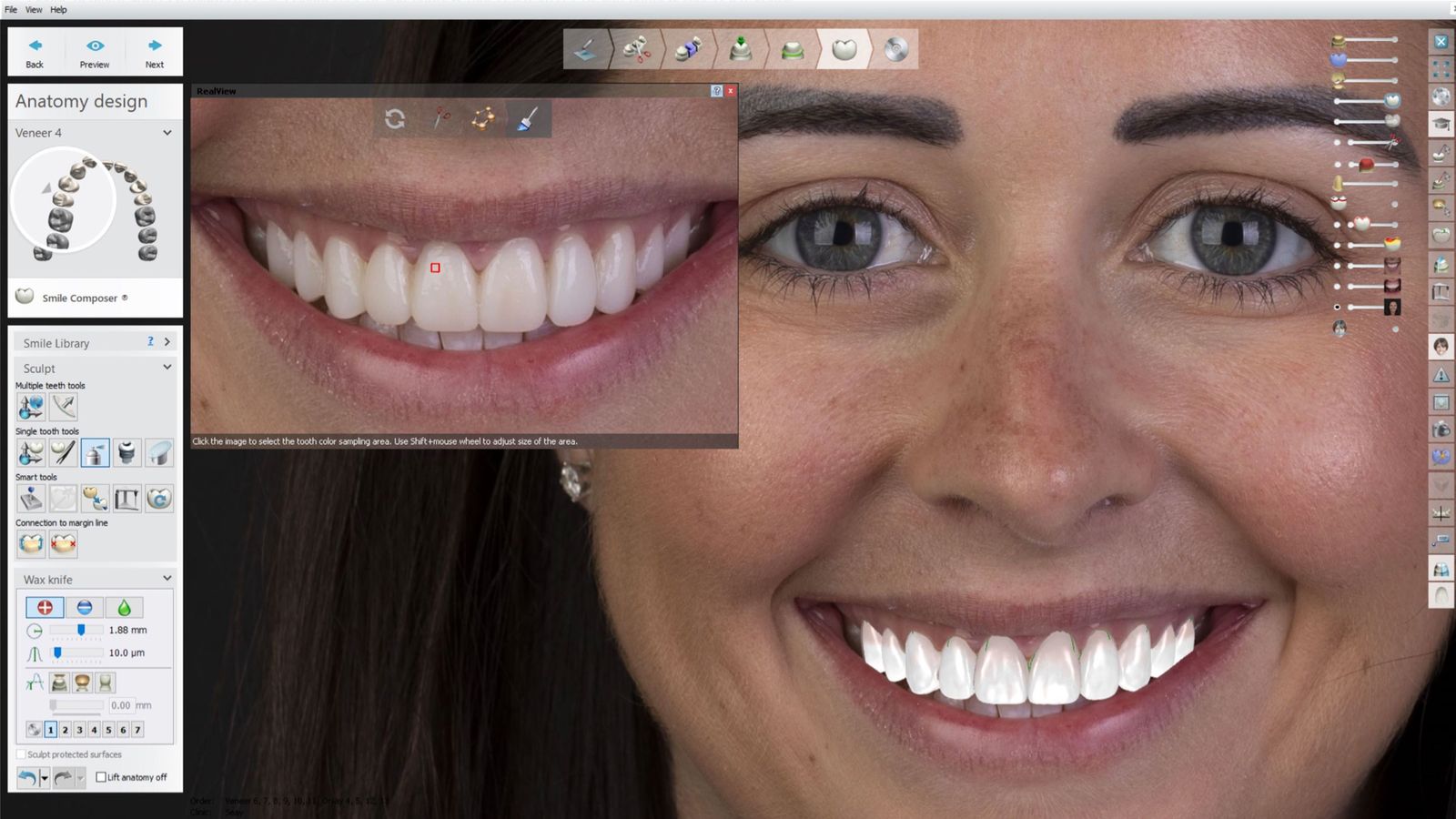
Using digital workflow tools for facial analysis, we evaluated her cant and asymmetries against her natural facial features, then planned a treatment that balanced the smile to the face rather than to the teeth in isolation. Seeing the cant on screen, in the context of her whole face, is what turned a vague "my teeth are too long" into a specific, solvable plan.
Creating Space So the Restorations Stay Conservative
Here's the thing about crowding: if you don't make room for the teeth, you end up taking room from them — grinding away structure to force alignment. I'd rather move teeth than remove tooth. So we used Invisalign to create the space the restorations needed and to address her mild crowding first. That orthodontic step is what let the final restorations stay conservative. When the teeth are already close to where they belong, you're refining, not rebuilding.
She also arrived with poorly adapted veneers. Removing them let me focus on precision and replace them with restorations that improved function without unnecessarily reducing tooth structure. That's the whole point of sequencing the case this way — every earlier decision buys you the freedom to be conservative at the end.
Provisionals as Blueprint and as Teacher
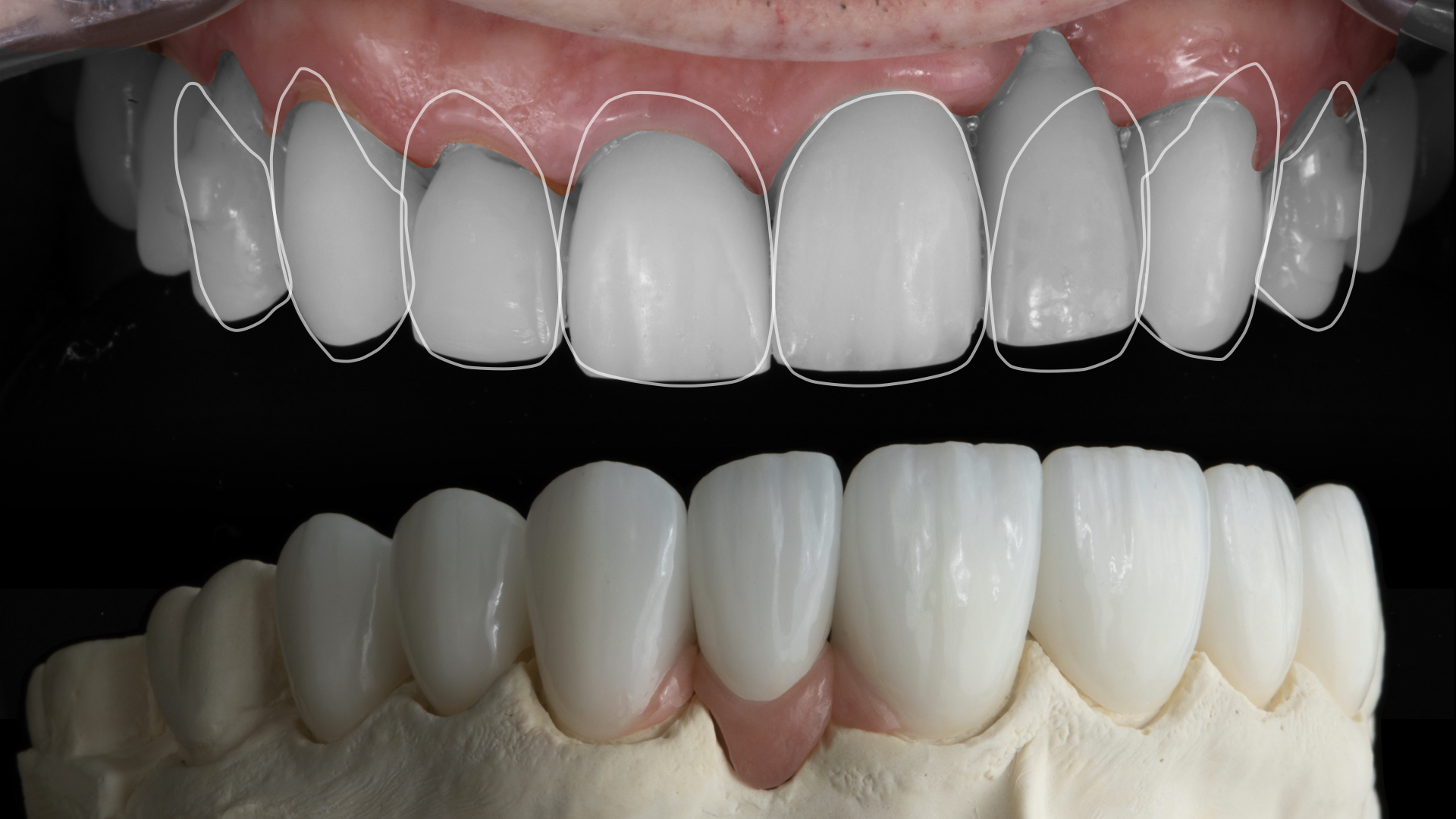
Provisionals did two jobs here. First, they gave the patient an immediate improvement she could see and feel — proof the plan was heading somewhere real. Second, they served as the working blueprint for the final smile, a place to perfect tooth length, position, and esthetic flow before anything became permanent. If something in the provisional isn't right, that's the moment to know it, not after the ceramic is bonded.
Documentation held all of it together. By capturing every step with photos, scans, and videos, we made sure the final restorations fit the plan we'd tested — and we used those same records to educate the patient about what was esthetically possible, including an honest conversation about working with opaque veneers. Opacity has limits, and a patient who understands those limits going in is a patient who trusts the result coming out.
The final outcome was a naturally balanced smile, where every tooth aligns to the face without the forced, over-processed look you so often see in traditional veneer cases. The goal was never to make her teeth shorter. It was to make her face and her smile agree with each other.
Three Key Takeaways from This Case
- Digital facial analysis changes the diagnosis: Facial and dental scans let you assess cants and asymmetries precisely, so you treat the real problem instead of the symptom.
- Provisional restorations are essential: They're a working model for perfecting length, position, and flow — and a teaching tool — before final placement.
- Conservative preparation protects longevity: Replacing poorly adapted veneers without removing excess tooth structure preserves both function and the tooth itself.