When everything feels out of balance — gingival heights, tissue architecture, tooth length, midlines, restorations layered in over decades — it's easy to feel overwhelmed before a case even begins. Where do you start? What guides the next decision, and the one after that? Complex esthetic cases aren't really about what needs fixing. They're about sequence — deciding where to begin and what parameters govern everything that follows. Here I'll walk through a full-arch restorative case that shows the repeatable system I use, one that starts long before we ever talk about ceramic or composite.
Start Before Esthetics, and Start With the Face
Before I analyze a single midline, I address the prerequisite everyone wants to skip: home care. Compromised hygiene affects tissue health, margin control, scanning, impressions — and ultimately how predictable the final result will be. With the right education and tools, tissue health can improve dramatically and quickly, and that stability is the foundation for everything, whether the plan is minimally invasive or a full rebuild.
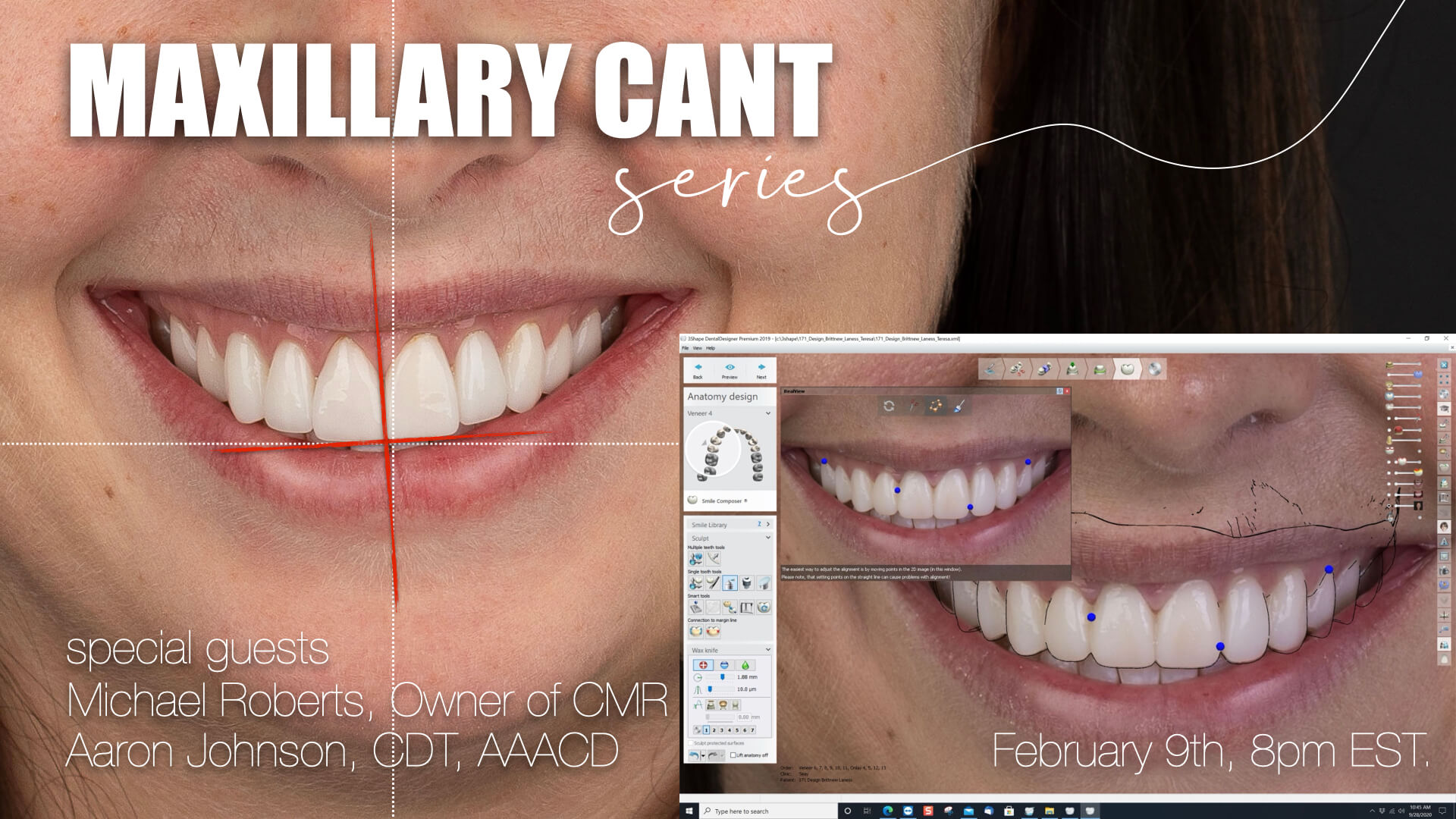
From there, smile design begins at the facial level, not the dental one. Using full-face photographs captured in natural head position — through a digital facebow, a dental facial analyzer, or calibrated photography — I set the framework before touching a tooth. I'm looking at the true midline relative to the face, not the pupils; at cant and facial asymmetries; at lip dynamics at rest and on smile. Orient the case correctly here and the lab designs to how the patient actually presents to the world, not to arbitrary reference lines.
Defining Parameters: White and Pink Esthetics
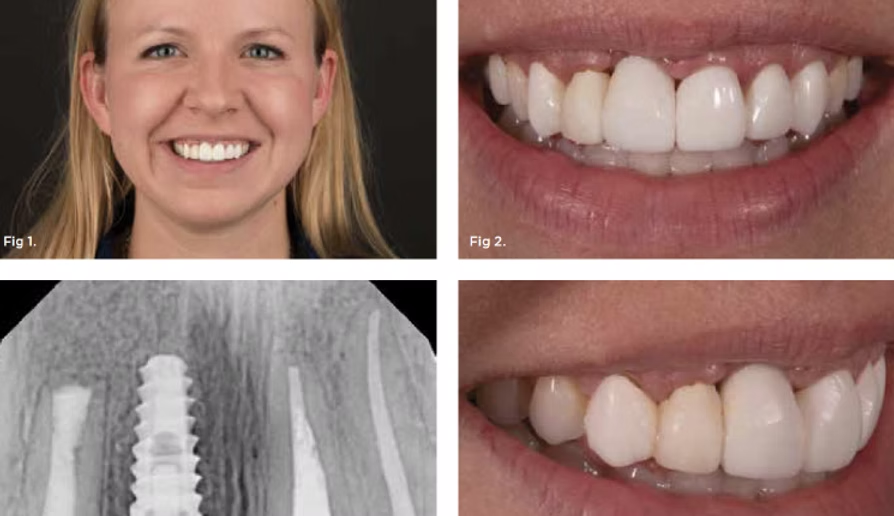
Once the records are set, the design becomes intentional. How many teeth are we treating? Where should they sit vertically and horizontally? What's the ideal gingival architecture — and, just as important, where are its limits? In this case, years of patchwork dentistry led me to restore the entire maxillary arch. I defined the tissue landmarks with a floss line and explorer marks to guide the gingival zeniths before electrosurgery, deliberately avoiding bone modification so the tissue levels reflected true, stable positions rather than wishful ones.
With a split dam sealing off the palate, we removed the full-coverage restorations efficiently and without interruption. Isolation ends stop-and-go dentistry, protects the patient, and keeps the workflow moving. Conservative prep refinement and strategic build-ups gave us more uniform prep shades — which matters more for the final ceramic than people expect.
Provisionals and the Lab: Diagnosis, Not Placeholders
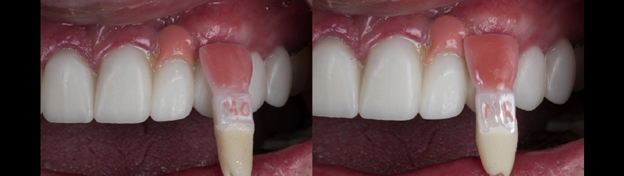
Provisionals weren't placeholders here — they were the diagnostic instrument. Full-face, sagittal, and retracted photos confirmed the corrected cant and midline, a balanced smile curve, and improved gingival harmony. Where tissue was deficient around an implant site, provisional pink composite let me evaluate cervical height and contour before committing to anything permanent.
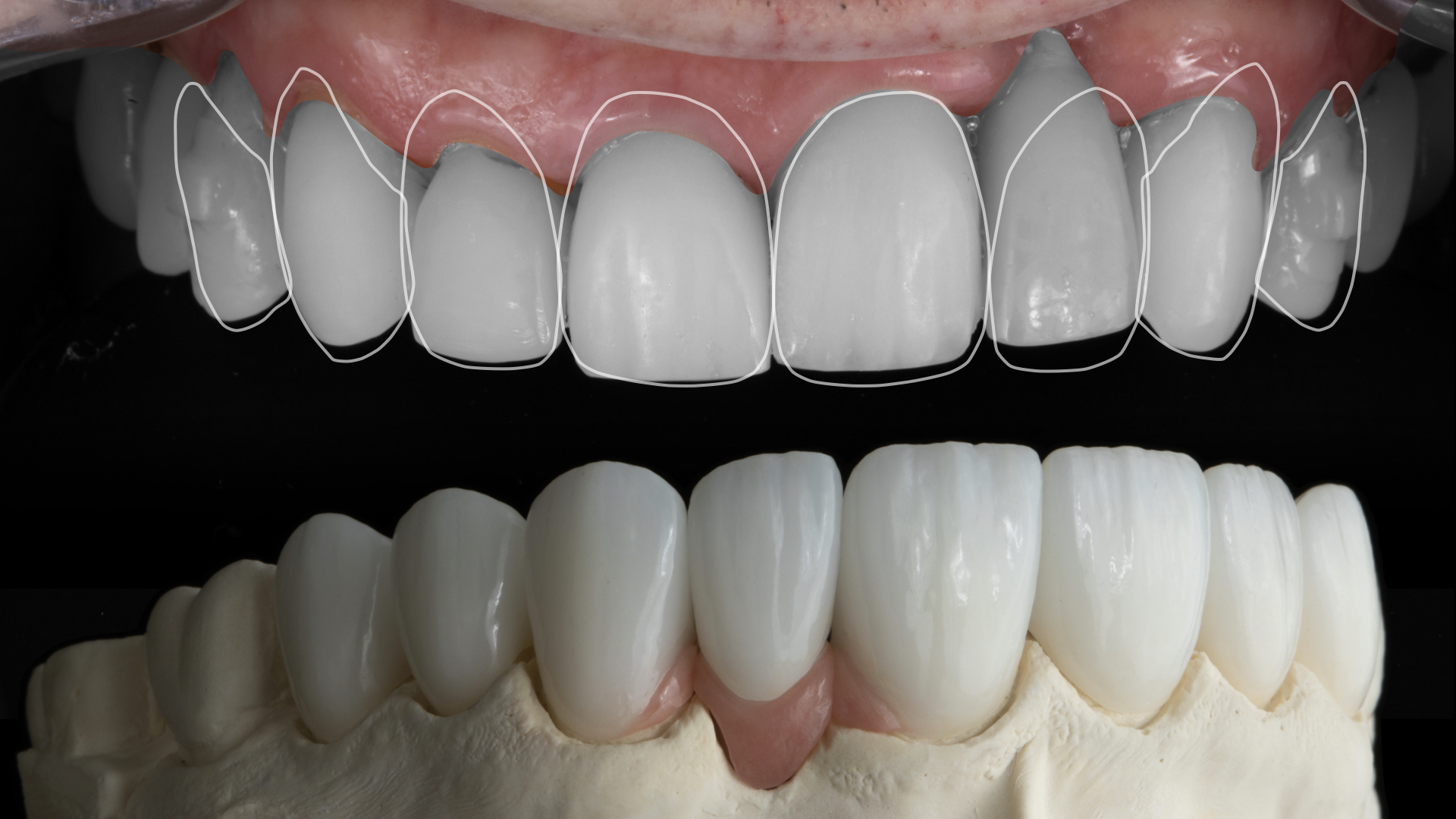
That data drove the lab conversation. Superimposed images revealed subtle discrepancies between the provisional and the proposed final design, and we adjusted before fabrication. By splitting pink porcelain across adjacent teeth, the ceramist created the illusion of papilla while keeping the contours cleanable and hygienic. The final restorations corrected the gingival discrepancies, restored proper tooth proportions, and re-established a smooth smile arc despite real anatomical limits underneath.
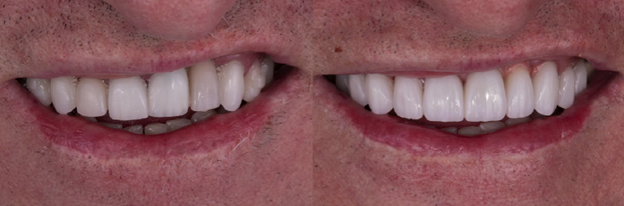
Here's the thing about advanced esthetics: much of it is the disciplined creation of the illusion of symmetry and balance. The face never gave us symmetry to begin with. Our job is to design as if it did.
Three Key Takeaways from This Case
- Start with the face, not the teeth: Facial records in natural head position set the framework every downstream decision depends on.
- Define tissue limits before cutting tooth structure: Marking zeniths and respecting bone keeps your gingival design honest and stable.
- Treat provisionals as diagnostics: They confirm cant, midline, and contour — and hand the lab the blueprint — long before anything becomes final.