
- Publication
- Digital Technology
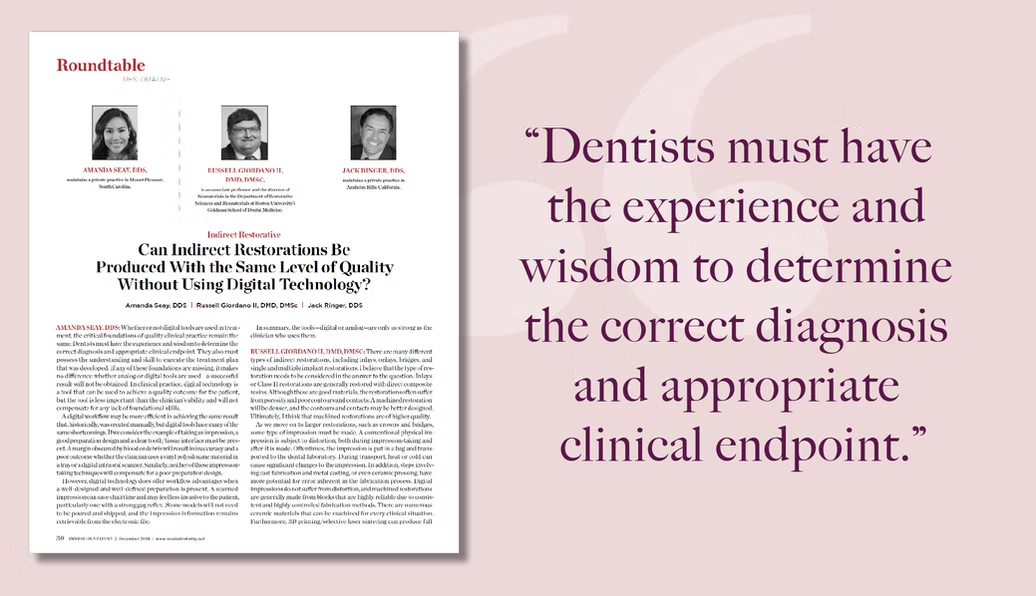
Can Indirect Restorations Be Produced With the Same Level of Quality Without Using Digital Technology?
Inside Dentistry
Seay A, Giordano II R, Ringer J. Inside Dentistry. 2018;14(12):30-31
Whether or not digital tools are used in treatment, the critical foundations of quality clinical practice remain the same. Dentists must have the experience and wisdom to determine the correct diagnosis and appropriate clinical endpoint. They also must possess the understanding and skill to execute the treatment plan that was developed. If any of these foundations are missing, it makes no difference whether analog or digital tools are used—a successful result will not be obtained. In clinical practice, digital technology is a tool that can be used to achieve a quality outcome for the patient, but the tool is less important than the clinician’s ability and will not compensate for any lack of foundational skills.
A digital workflow may be more efficient in achieving the same result that, historically, was created manually, but digital tools have many of the same shortcomings. If we consider the example of taking an impression, a good preparation design and a clear tooth/tissue interface must be present. A margin obscured by blood or debris will result in inaccuracy and a poor outcome whether the clinician uses a vinyl polysiloxane material in a tray or a digital intraoral scanner. Similarly, neither of these impression-taking techniques will compensate for a poor preparation design.
However, digital technology does offer workflow advantages when a well-designed and well-defined preparation is present. A scanned impression can save chair time and may feel less invasive to the patient, particularly one with a strong gag reflex. Stone models will not need to be poured and shipped, and the impression information remains retrievable from the electronic file.
Read the full article, written by Dr. Amanda Seay on Inside Dentistry
Read at insidedentistry.net ↗PDF-backed reprint — Inside Dentistry 2018;14(12):30-31 (full text behind download PDF; publisher copyright)
Stay current
New tips, case discussions, and course news as they release — straight from Amanda.
Unsubscribe anytime.