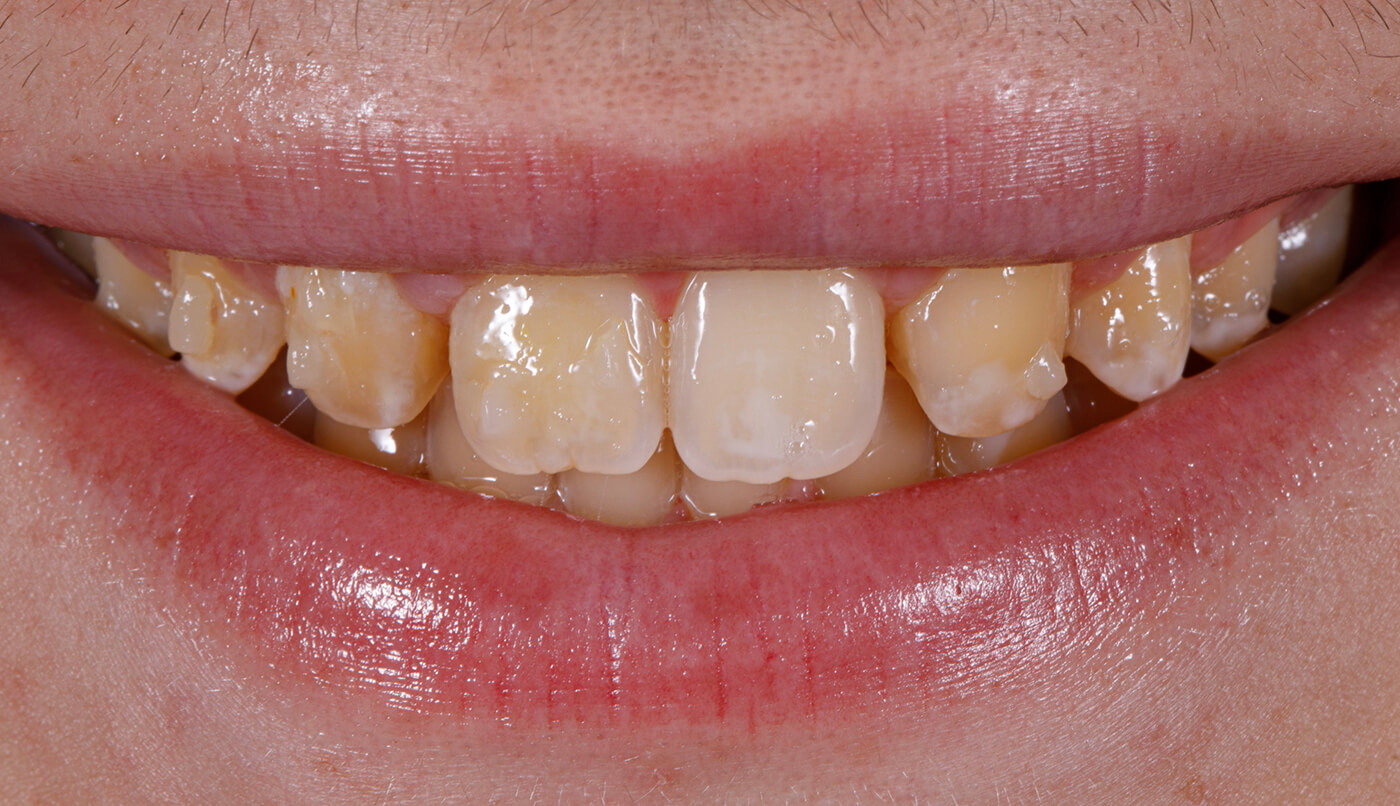
One of the hardest restorative scenarios I see starts the same way: a patient finishes orthodontic treatment — often with no smile design planning done up front — and arrives expecting a cosmetic result that looks seamless and natural. Canine substitution cases are the classic example. Once the braces come off, the esthetic and functional hurdles that were invisible in brackets suddenly become the whole conversation.
Here's the thing about these cases: they show up finished, but they're not finished. The orthodontist did their job. The teeth are aligned. But alignment isn't the same as smile design, and when I'm handed a "completed" case, I'm often still doing foundational esthetic work before I can even think about veneers.
Reading the Case Before You Touch It
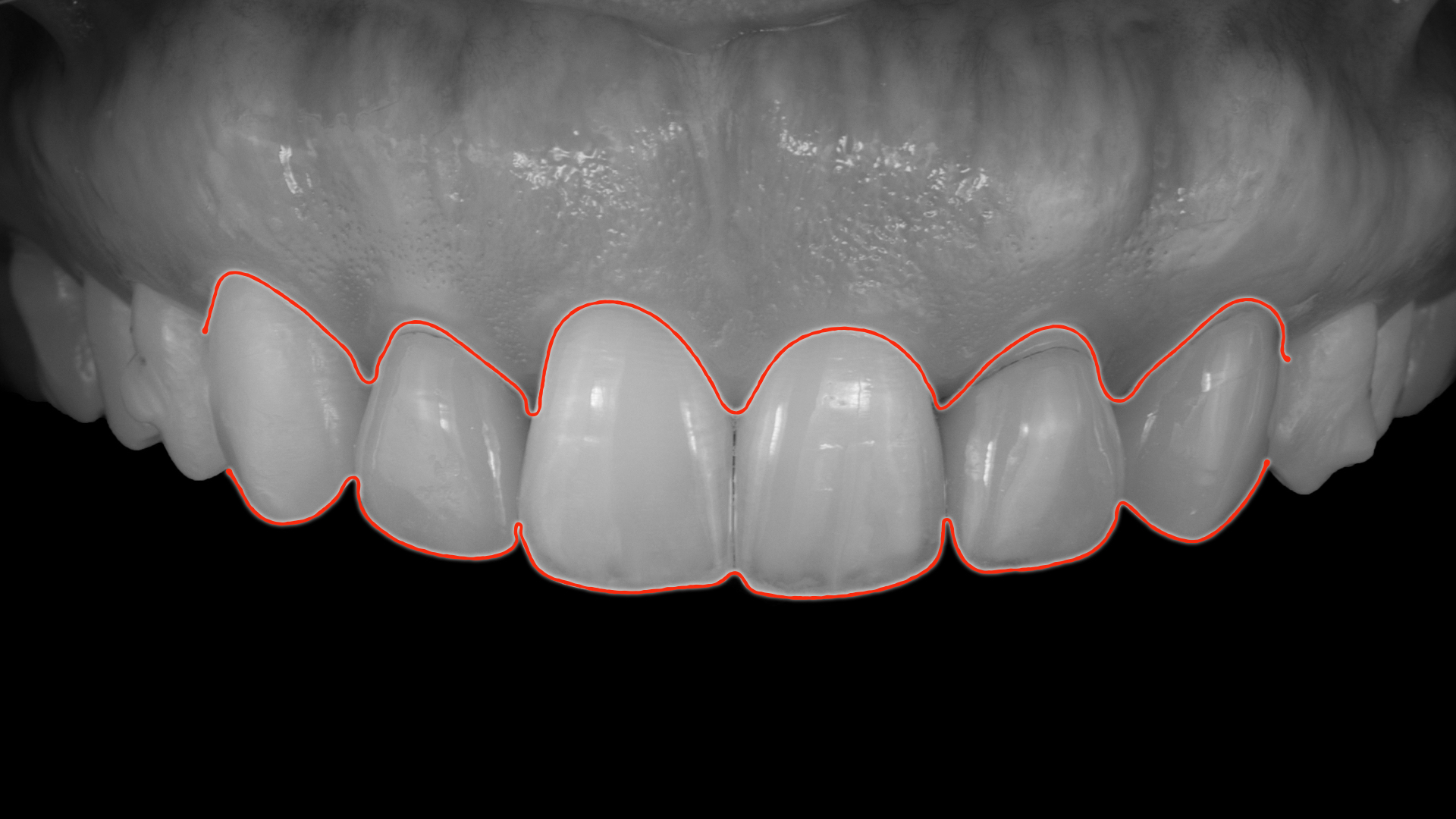
Before anything else, I evaluate three things: axial inclination, gingival zeniths, and the bone architecture underneath. Why those three? Because they drive the esthetic result more than the veneers ever will. If a substituted canine is tipped, or its zenith sits in the wrong place, no amount of porcelain hides it. The eye reads asymmetry in the tissue and the long axis of the tooth first, before it reads shade or shape. So I'm assessing what the orthodontic setup gave me and, honestly, what it didn't.
That's the part people underestimate. A substituted lateral or canine can look reasonable in a full smile and still be sitting on a gingival framework that fights you. My job is to see that before I prep, not after.
Crown Lengthening Is a Bone Conversation
When I decide to crown lengthen, I want to be clear about what I'm actually doing. Surgical crown lengthening isn't just about exposing more tooth structure. It's about reshaping the bone so the tissue can drape into harmonious contours and support an ideal emergence profile. If I only move soft tissue and ignore the bone, the tissue creeps back and I've solved nothing.
That's why I think of it as a bone conversation. The tissue follows the bone. If the underlying architecture is thick, bulbous, or asymmetric, I address the bone, and the zenith and emergence fall into place. Then I manage the tissue with precision and communicate clearly with my lab so we maximize the result — even in minimal-prep veneer cases where I'm removing almost nothing.
Four Pearls From the Tip
- Evaluate bone thickness before crown lengthening: When thick or bulbous bone is present, especially in the premolar region, flap surgery may be necessary to create space and define a clean emergence profile.
- Avoid shifting the zenith too mesially: Elevating tissue on a misaligned tooth throws off the visual balance, so be deliberate about where that high point lands.
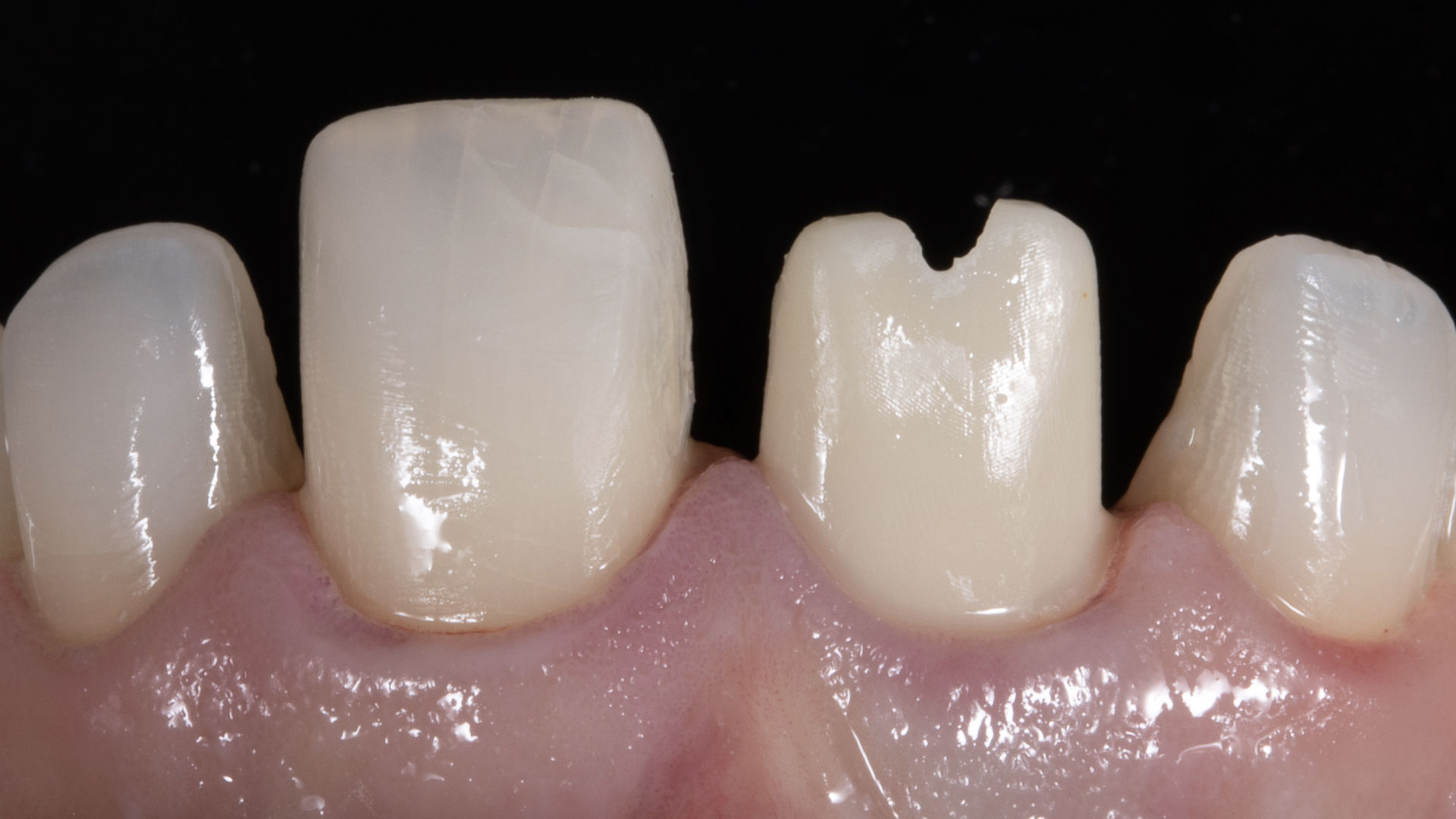
- Use shrink wrap provisionals for minimal-prep veneers: For conservative cases, spot etch and shrink wrap provisionals give excellent esthetics without over-preparing teeth.
- Sequence matters during veneer delivery: Cementing restorations in a thoughtful order protects symmetry and contact-point accuracy.
Three Key Takeaways from This Case
- Finished ortho isn't finished esthetics: A completed orthodontic case can still need foundational work before it's ready for a cosmetic result.
- Bone drives the tissue: Crown lengthening is about reshaping bone to support the zenith and emergence, not just uncovering tooth.
- Conserve where you can: Spot etch, shrink wrap provisionals, and a thoughtful delivery sequence let you refine the smile without over-preparing teeth.