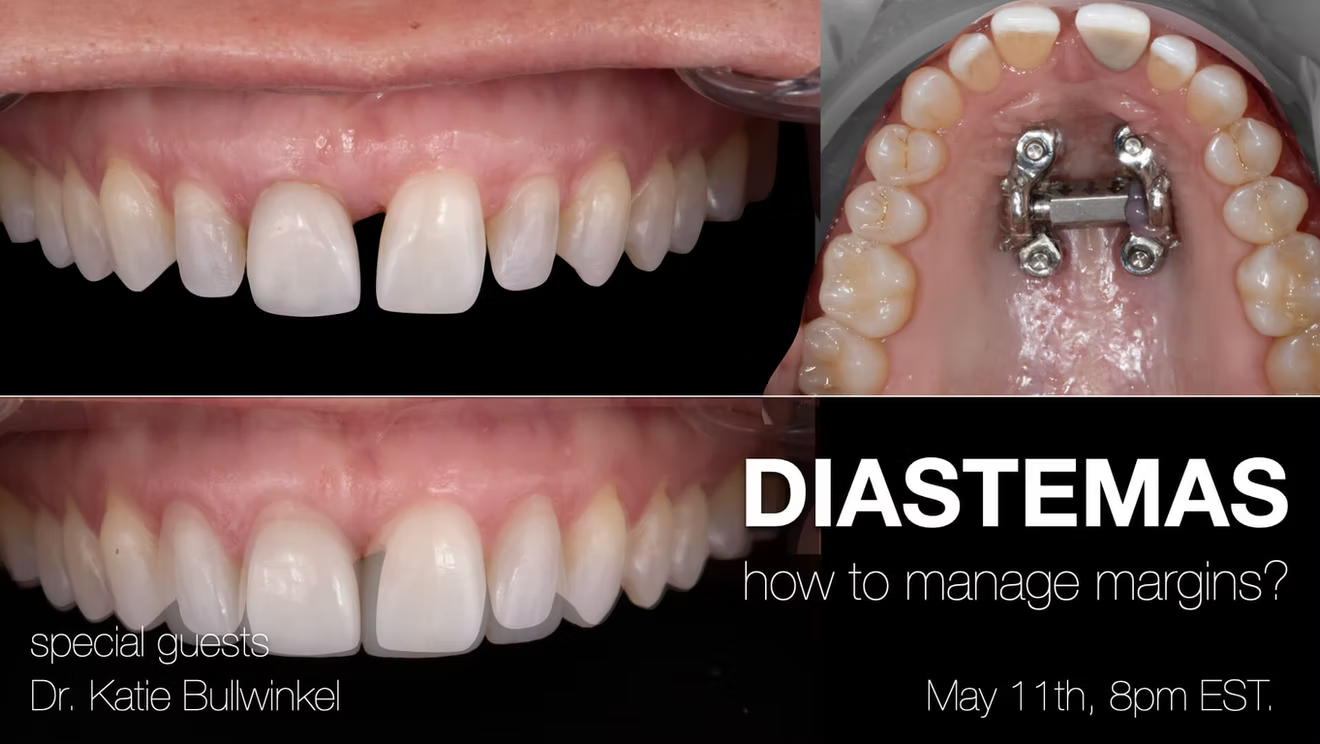
A canted maxilla is always a challenge, and the reason is simple: the fix isn't to correct the cant, it's to quiet it. Chase perfect correction and you over-treat. Ignore it and the eye finds it anyway, because even subtle imbalance is something people notice long before they can name it. The goal is symmetry the face reads as calm, achieved with as little intervention as I can get away with.
This patient came to me unhappy with an asymmetric smile caused by a canted maxilla. Before I looked at a single tooth, I looked at her face.
Reading the Face Before the Teeth
I drew my references from the face, not the arch. Lines from commissure to commissure and the position of the pupils showed me where the imbalance actually lived — mostly around the commissures. Her midline looked centered at rest, which can lull you into thinking everything's fine. Then she smiled, and the cant announced itself.
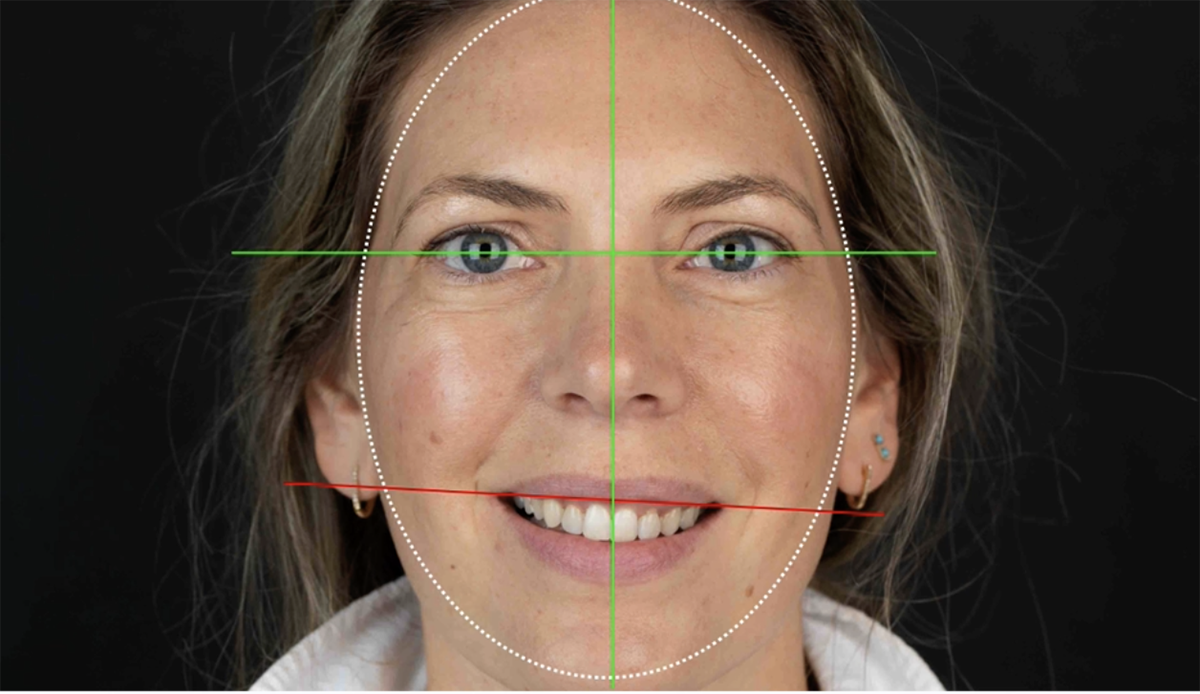
Here's the thing about a canted case: if you design to the teeth in isolation, you'll build a beautifully symmetric set of restorations that still looks crooked in the face. So I anchored to the canines. Canine position is the most reliable reference I have, because it's least affected by lip length, age, or sex. And hers were already sitting close to ideal, right at the lip line. That gave me a fixed point to design around instead of guessing.
Pink and White, in Balance
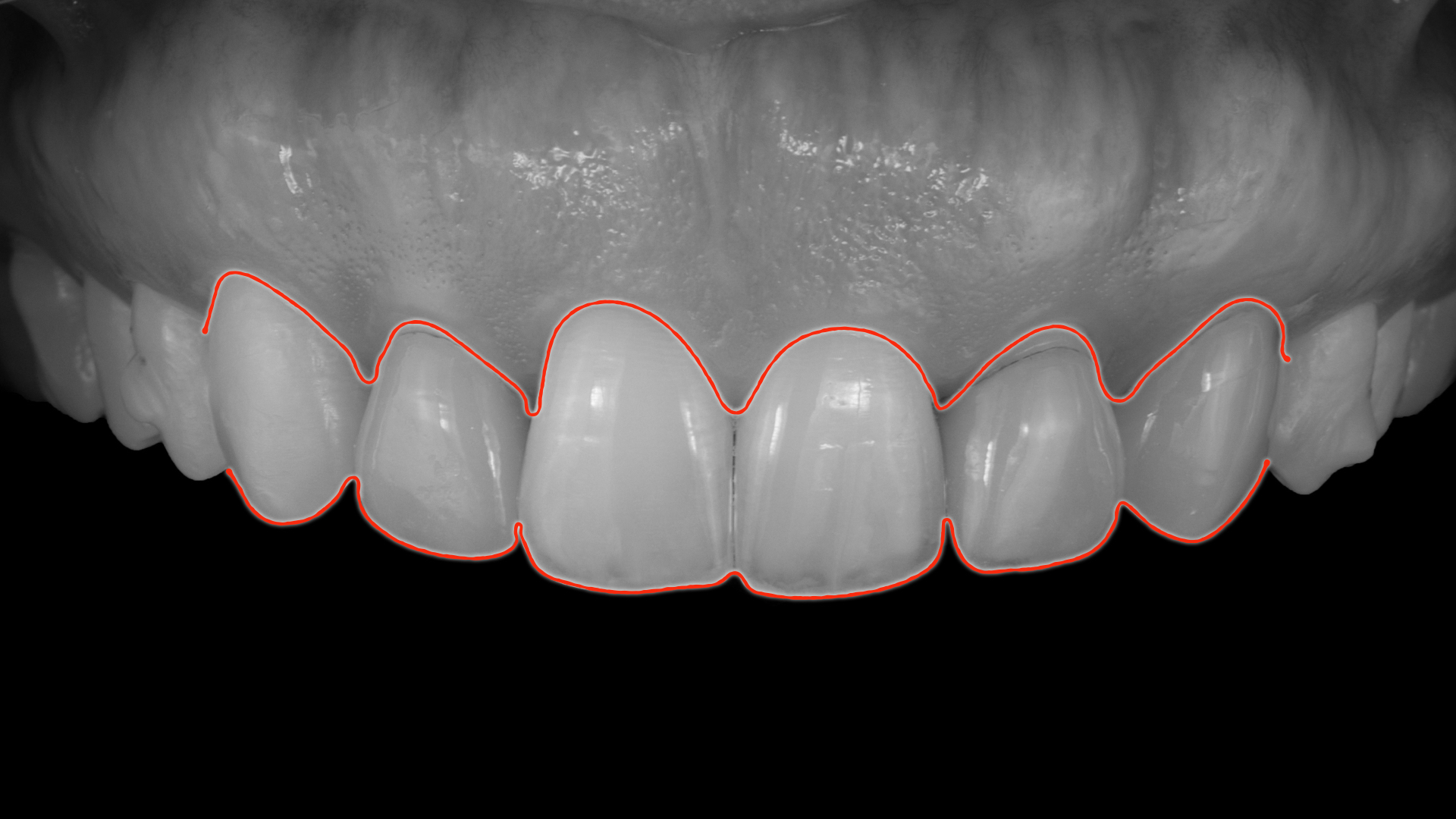
You can't solve this one on the white alone. I evaluated the pink and white esthetics together, because gingival scallop and uneven tissue height were doing as much to unbalance the smile as the teeth were. To plan the tissue, I used a simple trick — floss laid along the gingival line to mark it — so I could see a more symmetrical gingival contour before committing to anything aggressive.
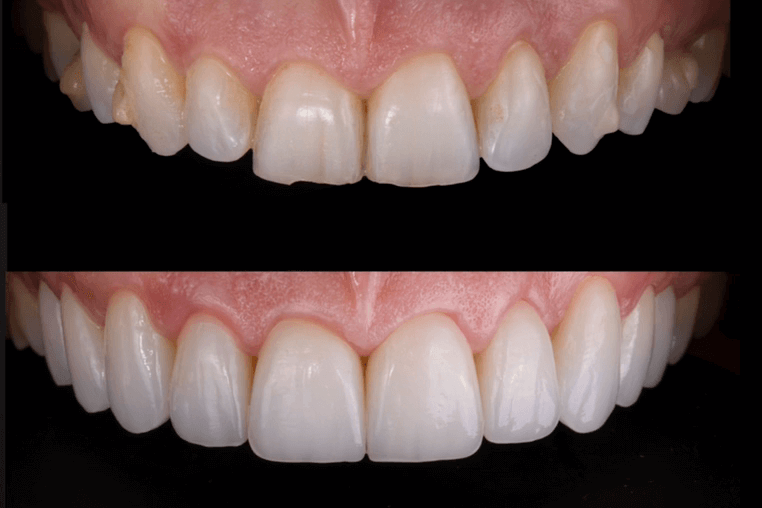
On the white side, the plan spanned teeth 7, 8, 9, 10, and 11. Six restorations were originally on the table, but once I had the canines as a reference and the tissue plan in place, I could see that five would do it. Dropping the sixth let me preserve enamel and stay inside minimally invasive principles — which is always the direction I want to move when I have the choice.
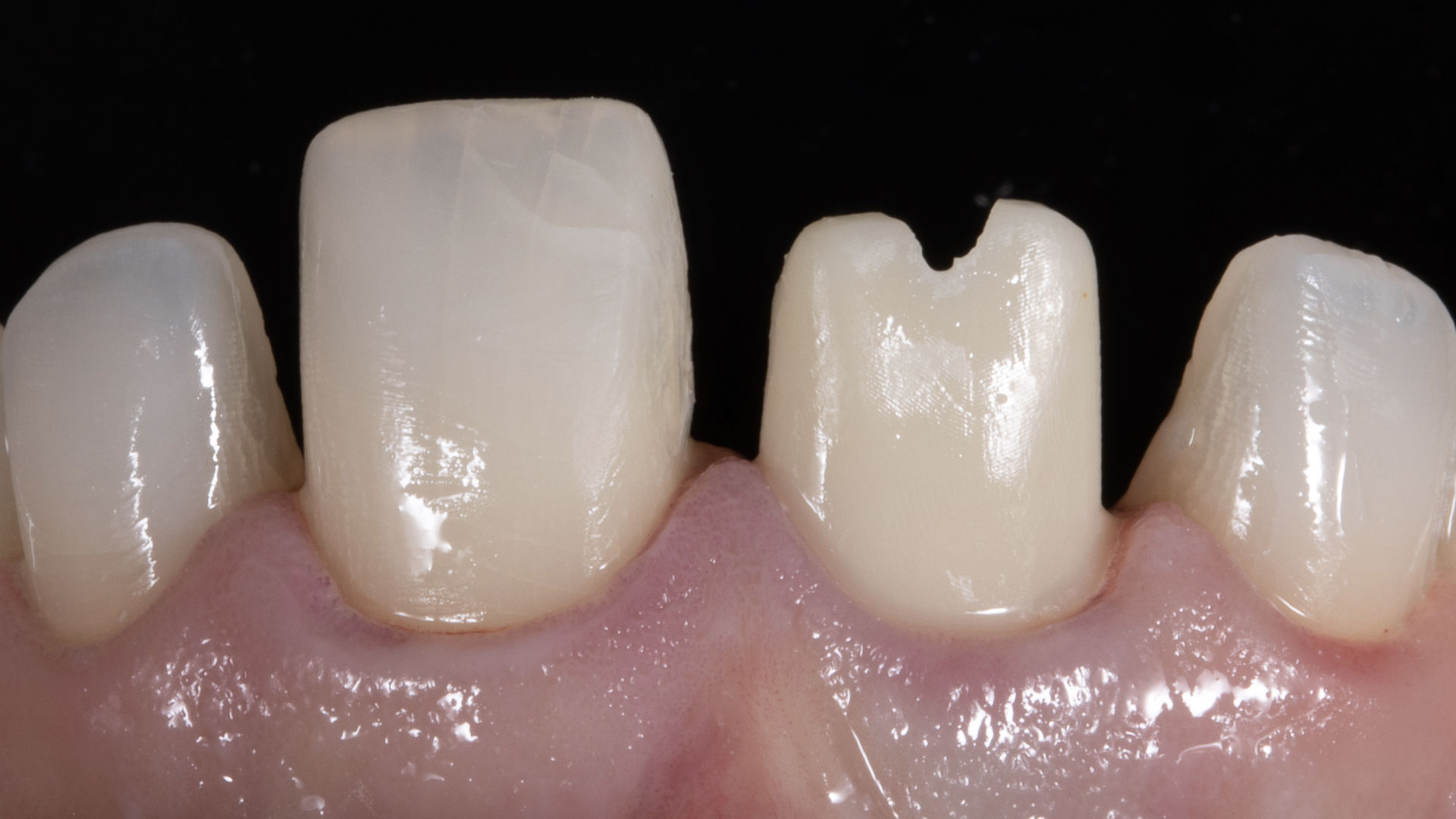
Preparation and isolation carried the case. Teeth 8 and 9 got minimal prep, and I isolated completely, because predictable bonding isn't luck — it's a dry, controlled field. After crown lengthening and insertion of the restorations, the tissue and the teeth finally agreed with each other. The smile read as balanced, the pink and white in harmony, the result natural rather than obviously "done."
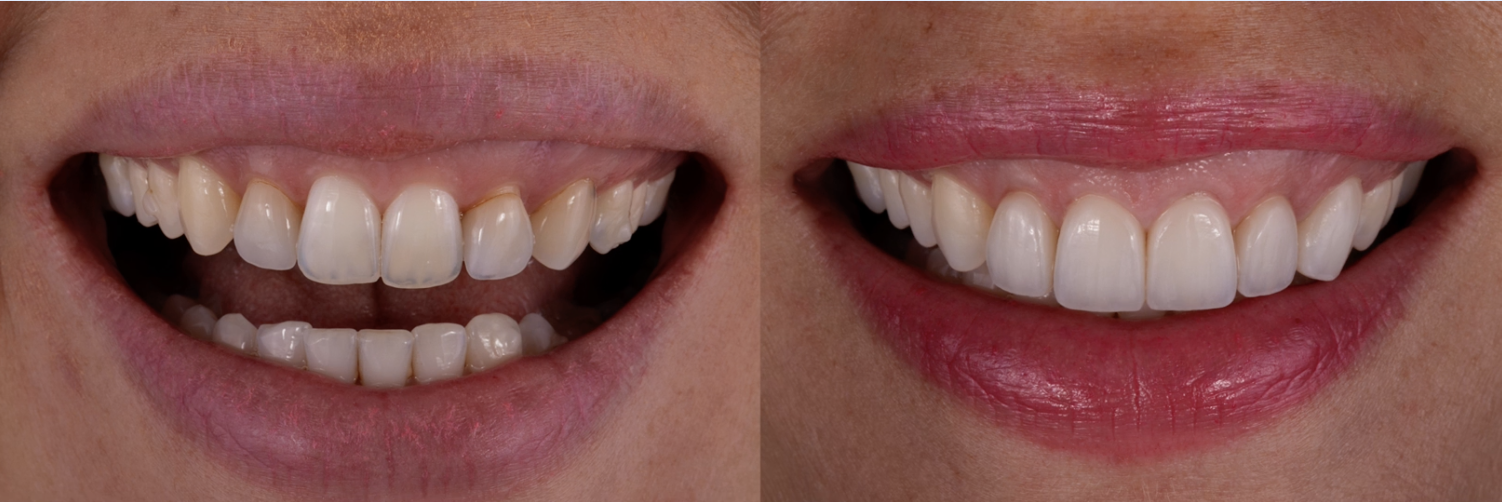
Did I fully correct the cant? No. And I didn't try to. The cant was still there if you went looking for it, but the overall esthetic balance was dramatically improved — and that's what she saw in the mirror. Restraint did more for this smile than aggression would have.
That's the lesson I keep relearning with these cases: the strongest plan is often the one that removes the least. Read the face, find your fixed reference, respect the tissue, and let conservative choices carry a difficult case to a result that looks like it was always meant to be there.
Three Key Takeaways from This Case
- Assess the smile within the face: Facial references like the commissures and pupils reveal imbalance that a tooth-only exam will miss.
- Anchor to the canines: Canine position is least affected by lip length, age, or sex, so it gives you a stable reference for designing restorations.
- Control pink and white together: Managing gingival contour alongside the restorations — and choosing five teeth over six — preserves enamel while restoring balance.