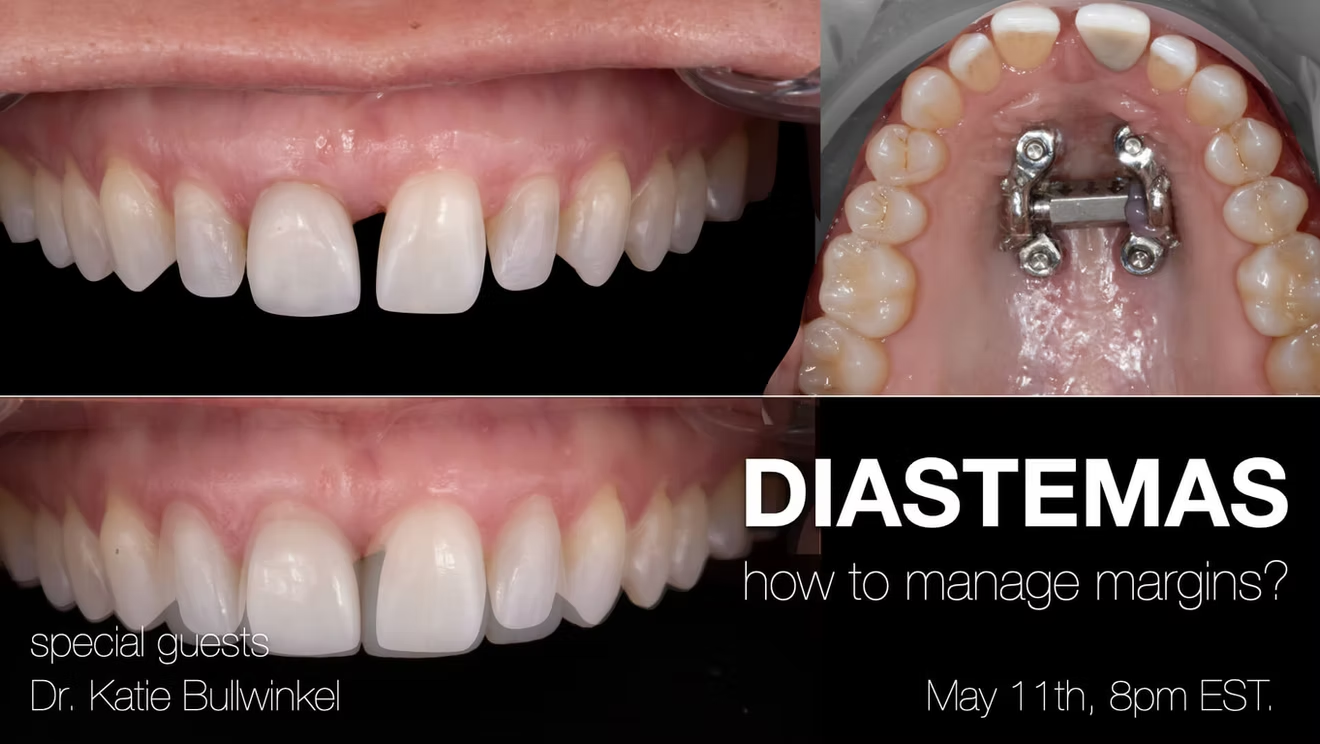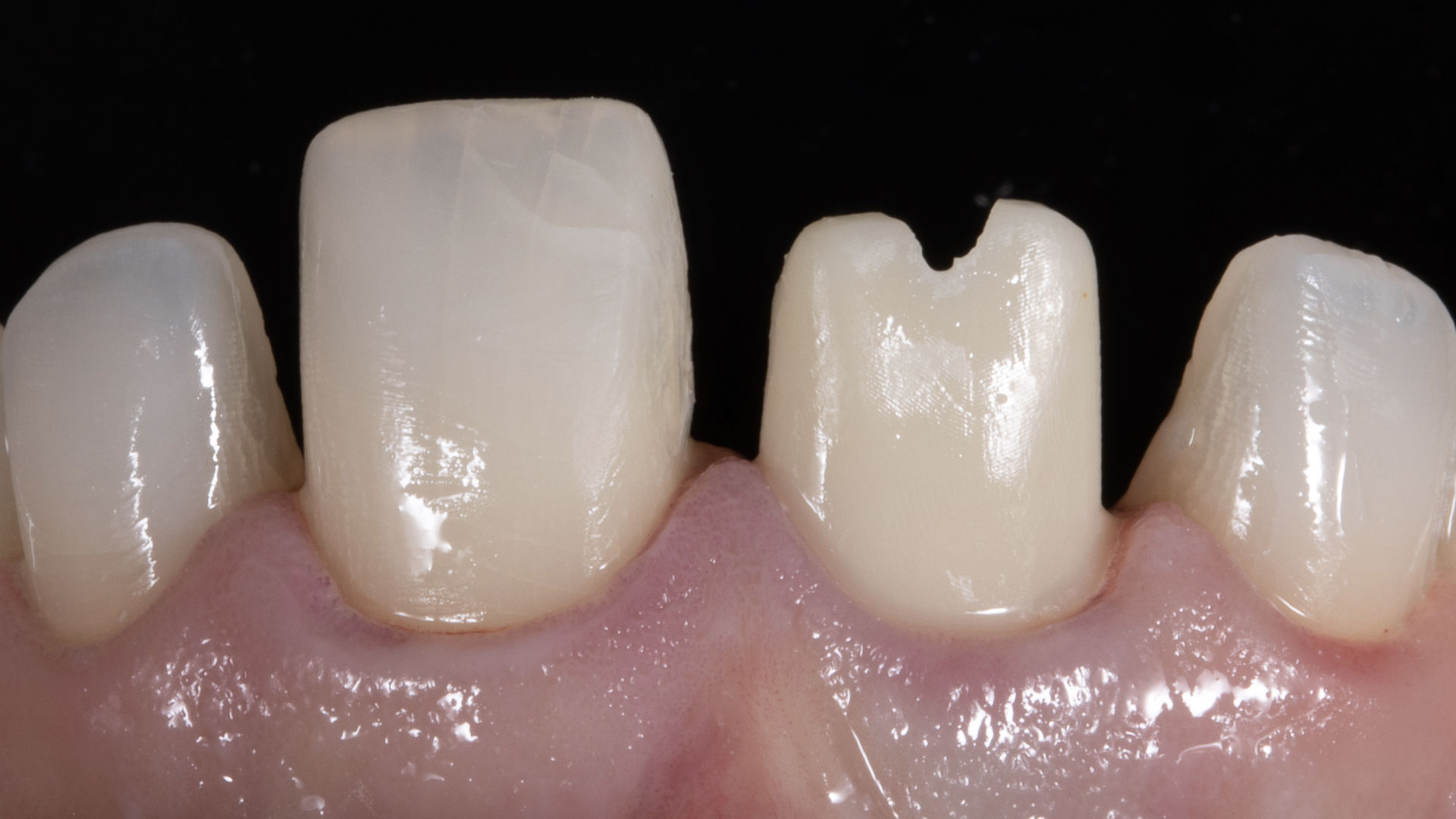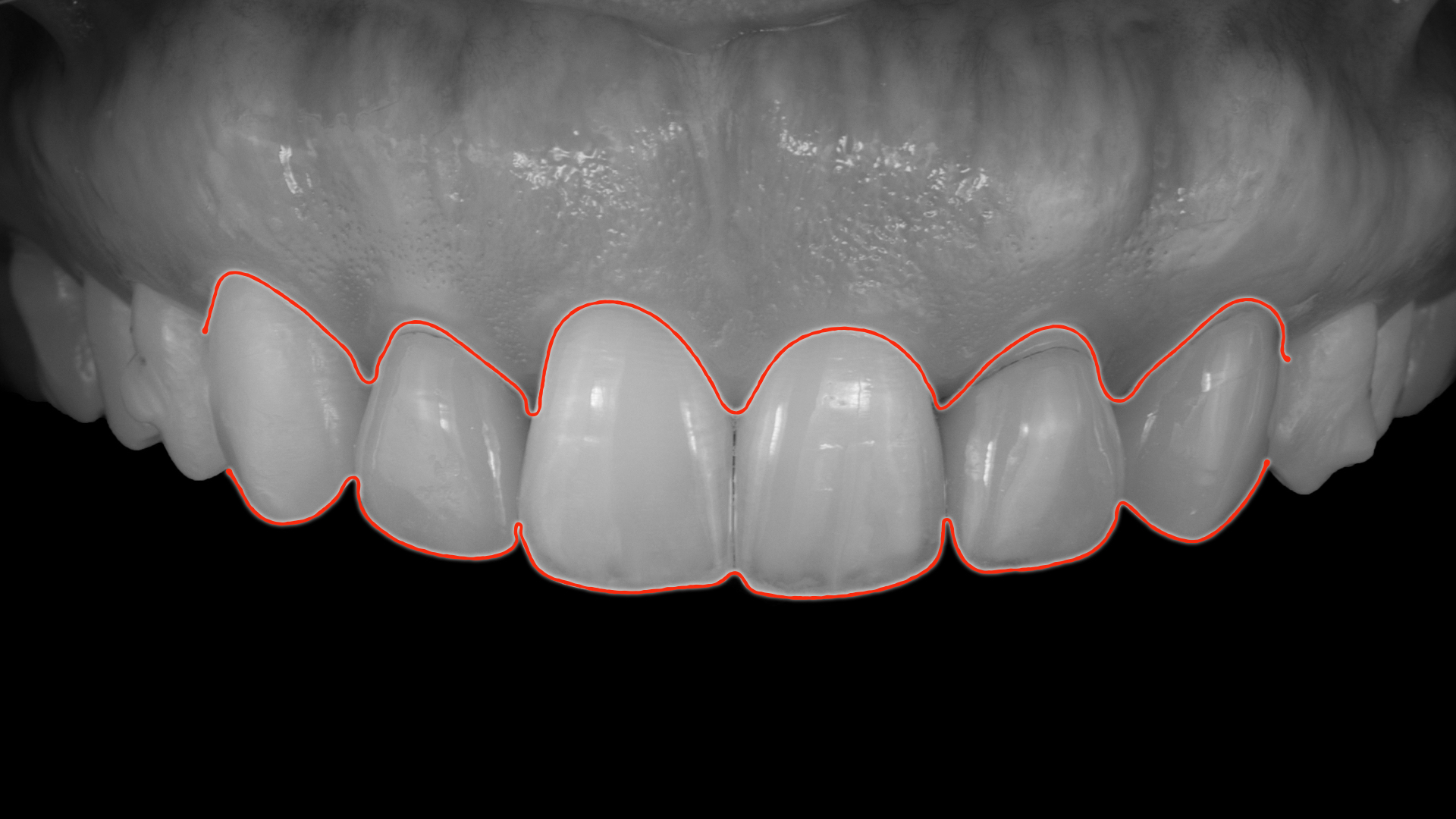
When I talk about the restorative periodontal interface, I'm really talking about the harmony between the pink and the white — the tissue and the teeth. A great smile isn't just about perfectly shaped teeth. It's about how those teeth interact with the surrounding gingiva to create a result that reads as natural. In this case, I want to walk you through performing crown lengthening on the same day I placed composite veneers — one visit, predictable, efficient.
Reading the Real Problem
My patient came in with healthy teeth, good bone, and beautiful tissue. She wanted a smile that reflected her personality. Her main concern was a small gap between her teeth and some minor discrepancies in tooth shape. She wondered if aligners might close the spacing, and I understand why — but a closer look at her intraoral photos and videos told a different story. The issue wasn't just where her teeth sat. It was the shape, the proportion, the contour. Her lateral incisors were undersized, her centrals were slightly short, and the axial inclination added its own subtle challenges.
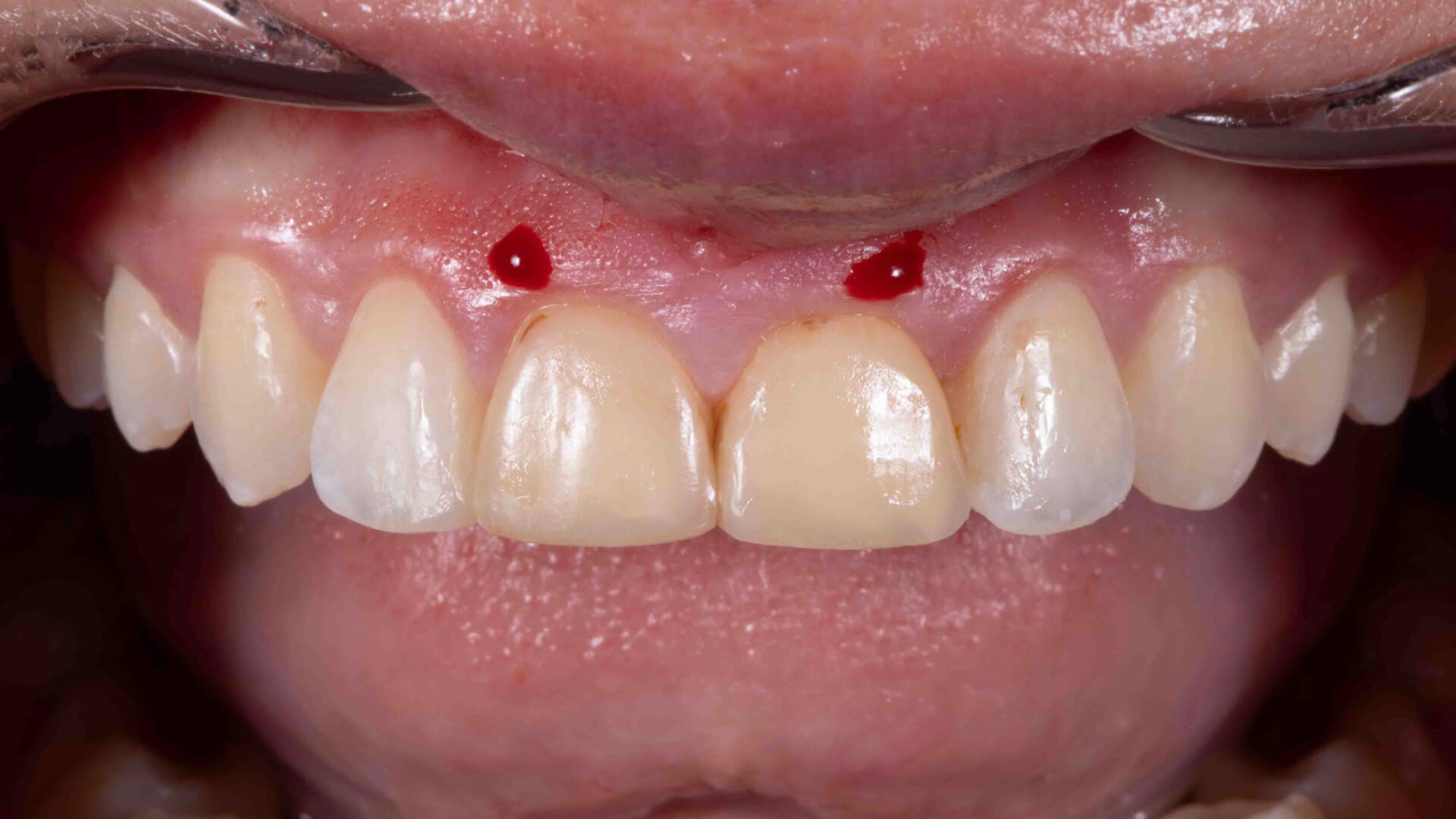
To help her see the potential, I created a composite mock-up. This let me mimic a "gum lift" — a term patients understand far better than "crown lengthening." By drying the tissue and placing composite directly, I could show her the impact of leveling asymmetrical tissue and improving symmetry. She loved it. With her approval, we moved forward.
The Smile Triad
Here's the thing about esthetic cases: you have to assess lip dynamics and gum display before you touch anything. This patient fell into a moderate risk category — she showed some gum tissue, but not excessively. Understanding her lip movement was critical. If excessive tissue shows because of how the lip moves, crown lengthening alone won't solve it, and minor adjustments like Botox or gentle gingival contouring may need to be part of the plan.
I use what I call the smile triad to guide my planning: incisal edge position, where the smile begins and ends; lip dynamics, the upper and lower lip movement during expression; and gingival architecture, the symmetry, height, and scallop of the tissue. Looking at her through that framework, I could name the asymmetries — the steep, triangular scallop on #10 against the broader, flatter scallop on #8.
One Visit, Predictable Result
On treatment day, I combined whitening, direct composite veneers on teeth 7 through 10, and crown lengthening — all in one appointment. First I adjusted the tissue with an electrosurge to create even symmetry. Then I finalized the composite restorations. Afterward I performed flapless crown lengthening, sculpting the bone so the tissue would stay stable and natural. The sequence matters here — tissue first, then restorations, then bone — because each step sets up the next.
What looks complex is actually surprisingly simple, right? Minimal invasiveness, predictable results, one appointment. The reason it works isn't the individual procedures — it's that I planned the pink and the white together from the start. When you treat the tissue and the teeth as one system, the smile takes care of itself.
Three Key Takeaways from This Case
- The interface is the case: Predictable esthetics come from planning the tissue and the teeth together, not sequencing them as separate problems.
- Mock-ups sell the plan: A composite mock-up and the phrase "gum lift" let the patient see and understand the outcome before we committed to treatment.
- Assess before you cut: Evaluating incisal edge position, lip dynamics, and gingival architecture tells you whether crown lengthening alone will deliver the result.