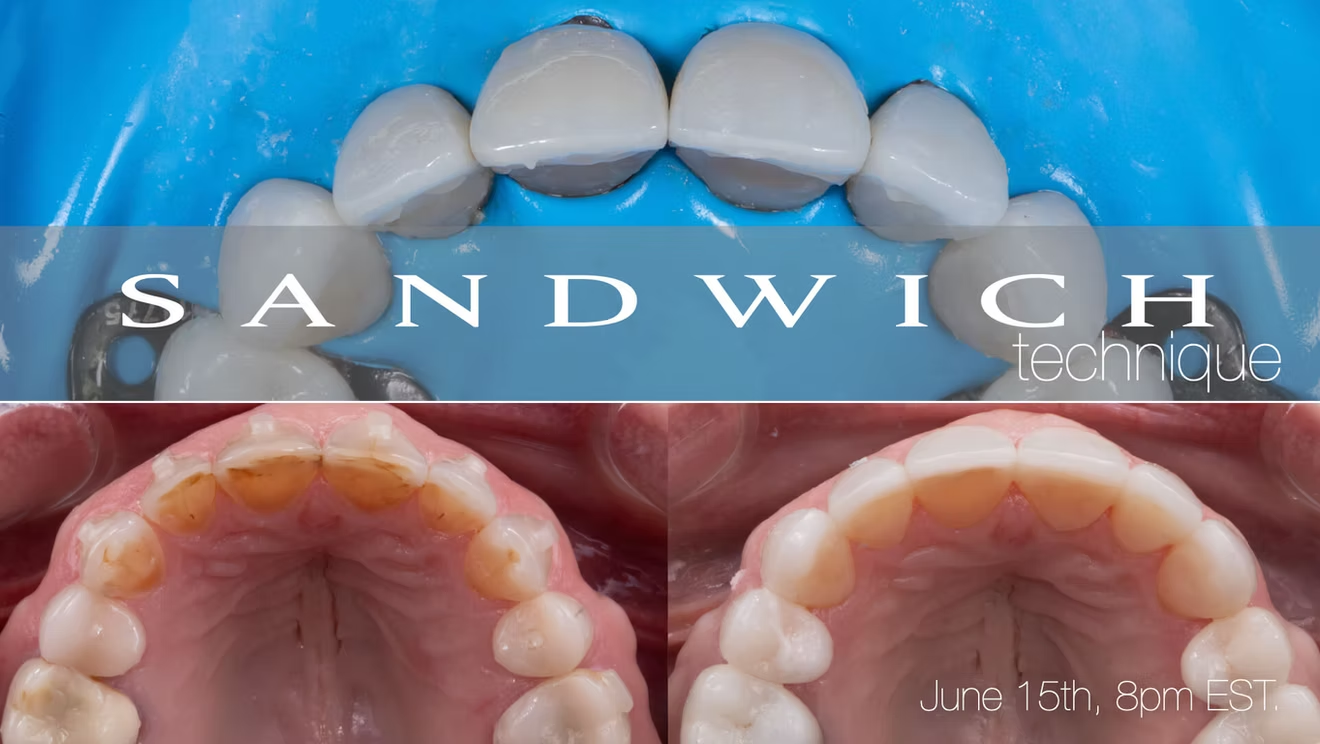
Cases with existing crowns and veneers can be deceptively complex. What you see on the surface rarely tells the full story, and the real work begins the moment those restorations come off. That's what makes these cases humbling. You plan from photographs and a smile you can study, then you take the veneers off and the tooth underneath rewrites your plan.
What the Restorations Are Hiding
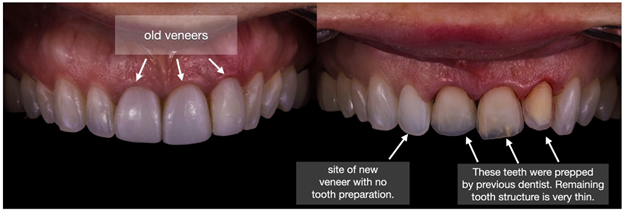
This patient presented with veneers on teeth 8, 9, and 10. At first glance the smile looked serviceable, but a few subtle signs told me something wasn't quite right. Here's the challenge with cases like this: restorations — especially crowns — can completely mask the true tooth position, axial inclination, and amount of reduction underneath. Until you remove them, you're working with incomplete information.
Veneers give you a little more insight than crowns, but even they get tricky when they wrap around the tooth. Thickness, reduction depth, the underlying preparation — all of it becomes hard to judge. When I removed this patient's veneers, several concerns surfaced: discrepancies in axial inclination, a noticeable size imbalance between contralateral teeth, and inconsistencies in color. On top of that, the gingival architecture showed a flat scallop, particularly between teeth 8 and 9. Any one of those on its own is manageable. Together, they explained exactly why the original smile never quite looked right.
Letting Pink and White Guide Each Other
Addressing this meant thinking carefully about both white and pink esthetics. I couldn't dramatically change the gingival scallop surgically — but reshaping the teeth let me improve how the tissue read. By modifying tooth contours and proportions, the restorations could support a more harmonious gingival presentation. It's a reminder I come back to constantly: pink and white have to work together, not in isolation.
From the patient's chair, none of this is visible — she sees a smile that looks "off" without knowing why. My job is to name the why: the inclination, the size mismatch, the color, the tissue — and then decide what I can actually move.
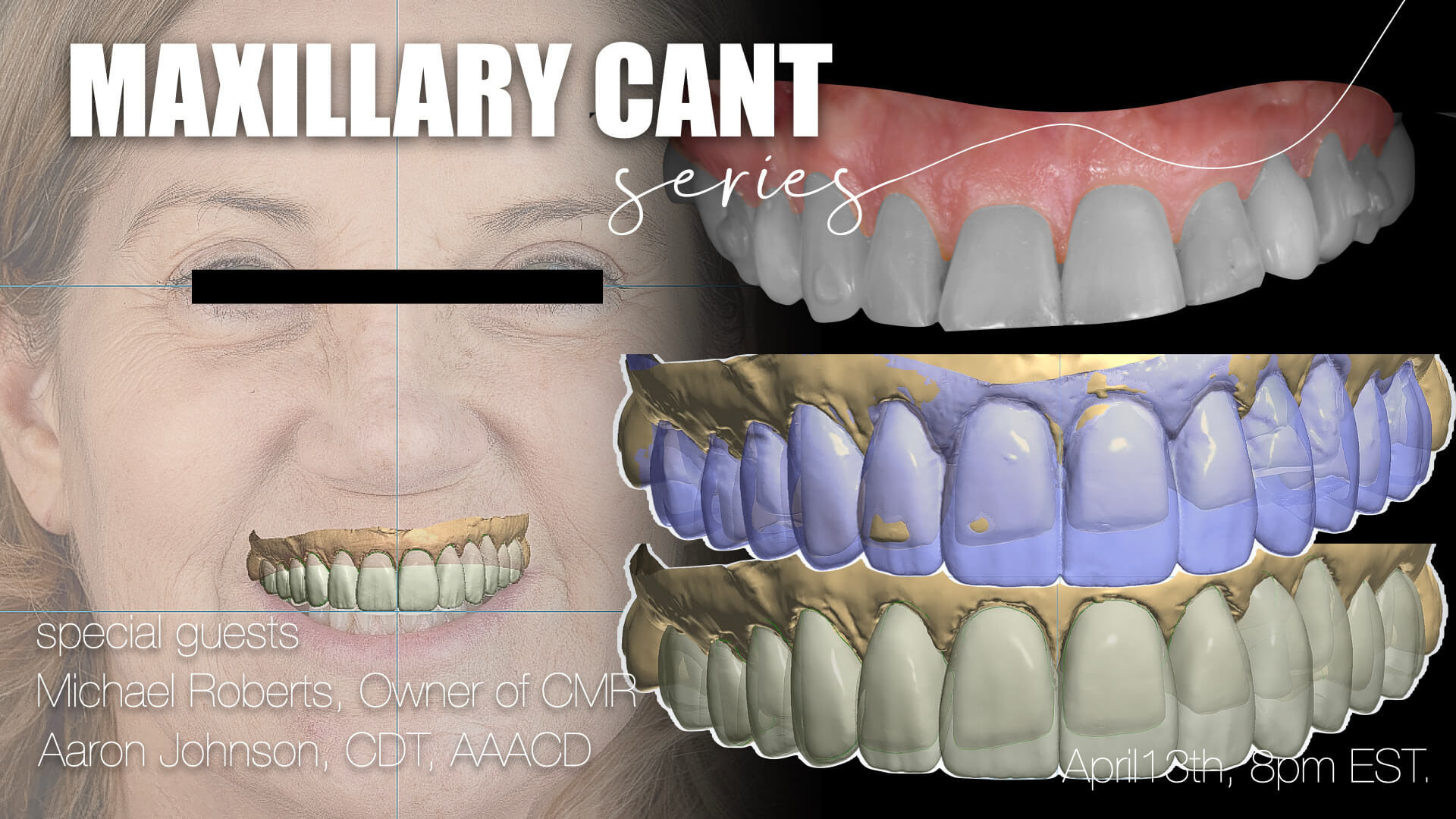
Evaluation extended well beyond the smile. Full-face and retracted views were essential to make sure the restorations complemented the patient's overall facial esthetics. Digital and analog face bows, detailed photography, and precise shade communication gave the lab a complete understanding of the case — and its limitations.
Getting the Shade Right
Shade selection needed special attention because of differences in enamel thickness. For teeth sitting entirely in enamel, I used a VITA Shade tab rather than a prep shade, which kept my communication with the lab accurate. The goal was seamless blending — not just with the adjacent teeth, but with the opposing arch. Working with eLab, I placed the shade target strategically between the teeth I was matching to ensure a smooth transition.
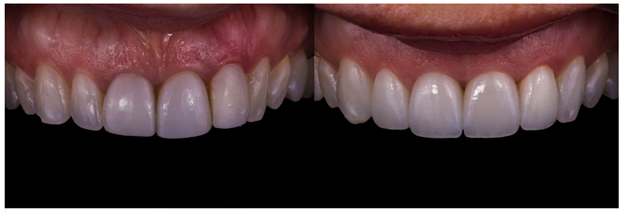
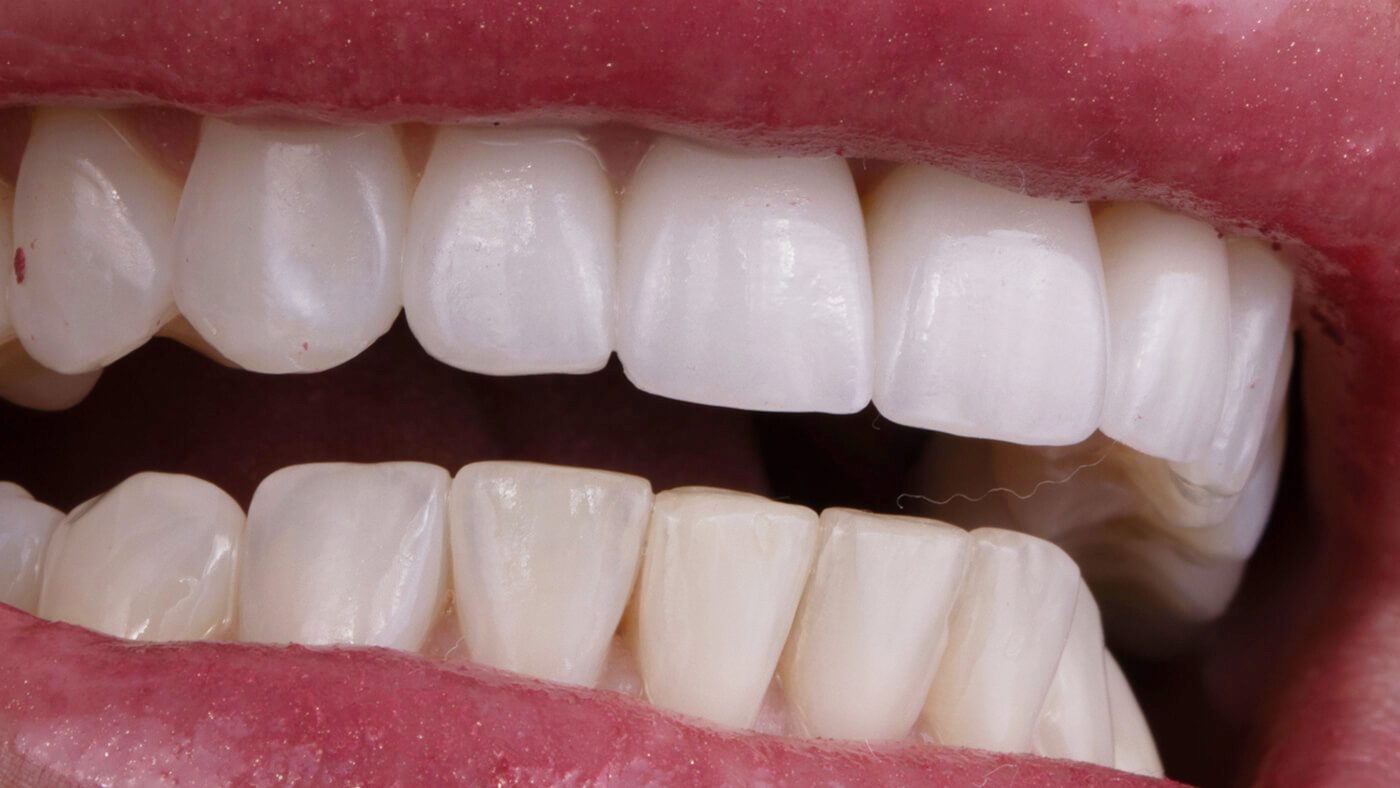
The final result showed how thoughtful adjustments to tooth shape, position, and shade can dramatically improve both the smile and the gingiva around it. None of it came from what I could see at the start. It came from removing the restorations, reading what was actually there, and letting the data drive every decision.
Three Key Takeaways from This Case
- Don't trust what you can't see: Existing restorations hide critical information about tooth position, inclination, and preparation until they're removed.
- Let pink and white guide each other: When surgical change isn't possible, strategic tooth shaping can still improve how the gingiva appears.
- Data drives predictability: Comprehensive records and precise shade communication with the lab are what make the outcome repeatable.